
Faith, Spiritual Gifts & Generosity: How God Uses Our Gifts to Serve Others

Faith, Spiritual Gifts & Generosity: How God Uses Our Gifts to Serve Others
Ephesians 4:11-12
And He gave some as apostles, some as prophets, some as evangelists,
some as pastors and teachers
“God, desiring to build and equip the body of believers for the work of ministry, distributed spiritual gifts to nurture and develop the church (Acts 13:1).”
The goal for the believer is to do the Father’s will. Spiritual gifting is deeply rooted in biblical teaching. It brings together three important themes found throughout the Word of God: faith, gifting, and testimony.
Faith is trusting God even when the outcome cannot yet be seen. Spiritual gifts are abilities and graces given by God for the purpose of serving others and strengthening the body of Christ. Testimony is the telling of what God has done, allowing His faithfulness to encourage others.
Together, these ideas describe something beautiful: believers receiving what God has entrusted to them, using those gifts in faith, and sharing the resulting stories so that God—not the individual—is glorified.
Hebrews 11:1 provides a foundational understanding of faith: “Now faith is the substance of things hoped for, the evidence of things not seen” (NKJV). Faith therefore involves trusting God beyond what is immediately visible. A person may not know how a need will be met, how a ministry opportunity will develop, or how a particular gift will affect another person's life, yet faith moves forward because God is trustworthy.
The Bible also teaches that believers have different gifts. Romans 12:6 says, “Having then gifts differing according to the grace that is given to us, let us use them” (NKJV). These gifts are not given for personal status or recognition. They are expressions of God's grace and are intended to bless others.
This means a faith-based gifting story might involve a teacher who faithfully shares biblical truth, someone with a gift of encouragement who strengthens a discouraged believer, a person who gives generously when resources are limited, or a servant who quietly meets a practical need. The story becomes significant when it demonstrates God's grace working through an ordinary person.
Woman's Solid 14K Rose Gold Faith Cross Necklace - Hebrews 11:1

What Does “Spiritual Gifting” Mean Biblically?
To understand spiritual gifting, it helps to separate the phrase into its biblical components.
Faith Means Trusting God
Biblical faith is more than positive thinking or optimism. It is confidence in God and His promises. Hebrews 11 presents faith as the foundation for approaching life when circumstances do not provide all the answers.
Faith does not mean that Christians never experience uncertainty. Instead, faith allows believers to act according to what they know about God even when they cannot see the entire path ahead.
This is important when considering spiritual gifts. A believer may recognize an ability to teach, encourage, lead, serve, give, show mercy, or minister in another way, but recognizing a gift is only the beginning. Faith is required to actually put action into the spiritual gift.
Sometimes using a gift requires stepping beyond comfort.
A person may feel inadequate to teach. Another may hesitate to encourage someone because they do not know what to say. Someone else may be reluctant to give because their own resources appear limited. A servant may wonder whether a small act of kindness really matters.
Faith says that the value of the gift does not ultimately depend upon the person's natural strength. God is the giver, and He can work through what has been entrusted to His people.
James 1:5 also reminds believers that wisdom can be requested from God.
“If any of you lacks wisdom, let him ask of God,
who gives to all liberally and without reproach”
Faith therefore includes asking God for the wisdom necessary to recognize and properly use what He has given.
Spiritual Gifts Come From God's Grace
The New Testament makes it clear that spiritual gifts are diverse. First Corinthians 12:4 states, “There are diversities of gifts, but the same Spirit” (NKJV).
Different gifts do not indicate different levels of spiritual worth. Instead, diversity is part of God's design for His people.
First Corinthians 12:7 explains that the manifestation of the Spirit is given for the profit of all. This is one of the most important principles for understanding spiritual gifts.
A gift is not primarily about what the individual receives from the gift. It is about what God can accomplish through that gift for the benefit of others.
Romans 12 provides another picture of this diversity. Paul mentions prophecy, ministry, teaching, exhortation, giving, leadership, and mercy. Each is to be exercised appropriately.
The message is straightforward: use what God has given you. The redeemed are commanded to constantly allow their lives to be transformed by the LORD.
A spiritual gift that remains unused cannot accomplish the purpose for which it was entrusted. A gift becomes meaningful when it moves from potential into service.
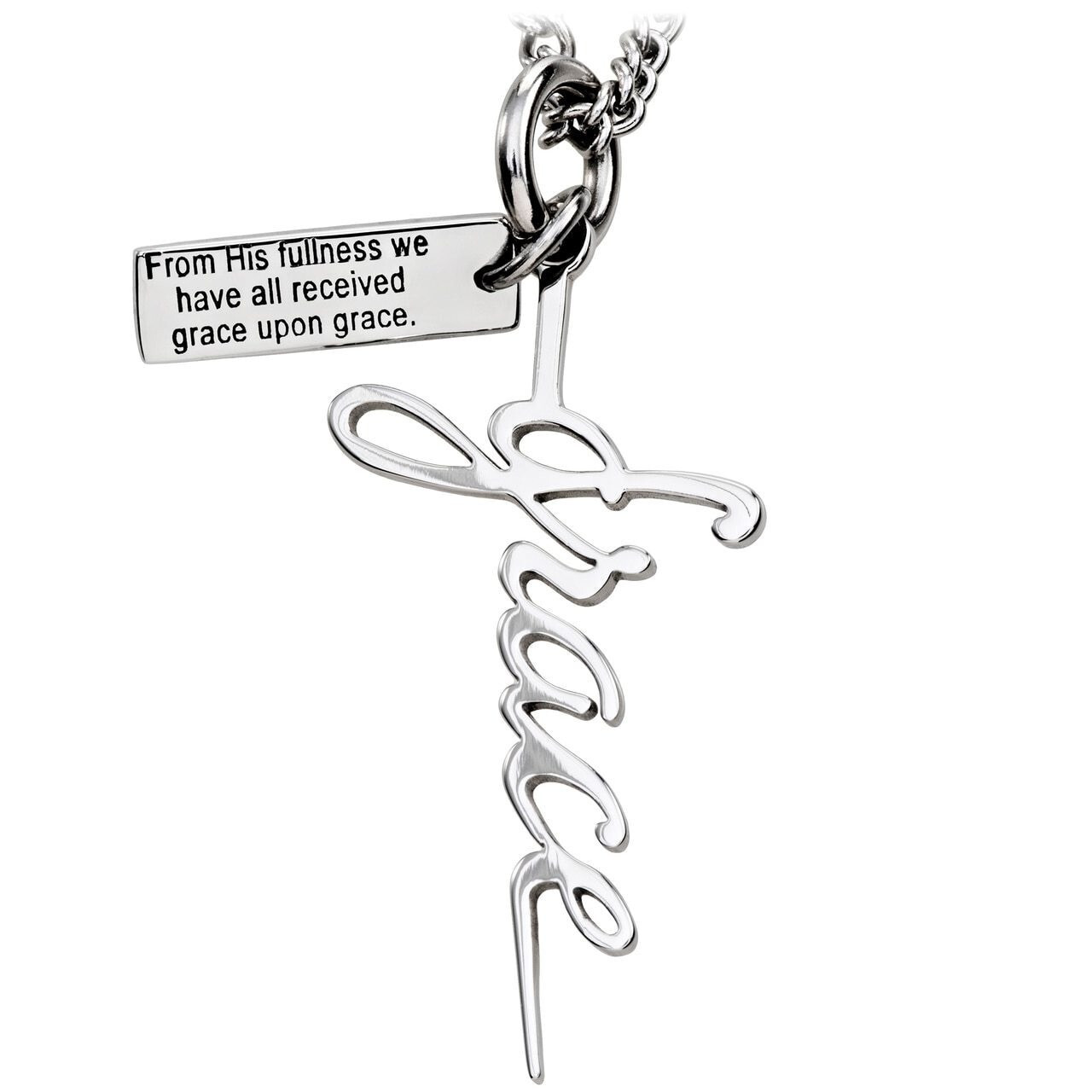
Women's Stainless Steel Grace Cross Necklace - John 1:16
Giving Is Also a Form of Grace
One of the most interesting aspects of biblical gifting is that generosity is included among the ways believers serve.
Romans 12:8 says that the person who gives should do so with liberality. The emphasis is not merely on possessing financial resources. Biblical generosity involves a heart that willingly shares what God has provided.
Second Corinthians 8 gives an especially powerful example. Paul describes believers in Macedonia who experienced significant difficulty and poverty, yet their joy and generosity overflowed.
Their circumstances did not determine their willingness to participate in God's work.
Second Corinthians 8:7 connects giving with other expressions of Christian maturity, encouraging believers to abound in this grace as well. The passage shows that generosity is not an isolated financial practice. It belongs alongside faith, love, diligence, and spiritual growth. The redeemed soul excels in giving.
This provides an important perspective on “faith based gifting.” A story of generosity is not necessarily about a person giving a large amount of money. It may be about someone trusting God enough to share what they have.
The gift might be money, food, time, transportation, skills, hospitality, encouragement, or practical assistance.
Biblical generosity begins with recognizing that what we have ultimately comes from God.
Spiritual Gifts Are Meant to Serve Others
First Peter 4:10 provides one of the clearest instructions concerning spiritual gifts:
“As each one has received a gift, minister it to one another,
as good stewards of the manifold grace of God.”
The word “stewards” is significant. A steward manages something that belongs to someone else.
In this sense, believers are not owners of their spiritual gifts in the ultimate sense. They are stewards of God's grace.
That changes the way a person approaches ministry.
• Instead of asking, “How can my gift make me important?” the believer asks,
“How can God use what He has given me to serve someone else?”
• Instead of asking, “Will people notice what I do?” the believer asks, “Will God be
glorified through this?”
• Instead of asking, “Is my gift as impressive as someone else's?” the believer
remembers that God intentionally gives different gifts to different people.
This perspective protects the church from competition and comparison.
The Beauty of Different Gifts Working Together
Paul uses the human body as an illustration of the church. A body has many parts, and each part has a different function. The same principle applies to the people of God.
One person may be gifted to teach. Another may have a strong ability to encourage. Someone else may excel in practical service. Another may demonstrate unusual generosity. Another may have a heart for mercy.
None of these gifts need to compete with another.
In Ephesians 4, Paul describes ministry gifts such as apostles, prophets, evangelists, pastors, and teachers. Their purpose includes “the equipping of the saints for the work of ministry” and the building up of the body of Christ.
The goal is not to create a small group of people who do all the ministry while everyone else watches. Rather, ministry equips God's people to participate. Every believer has an opportunity to contribute.
That contribution may take place from a pulpit, in a classroom, around a kitchen table, at a workplace, in a neighborhood, through a financial gift, or through a quiet act of compassion that nobody else sees.
Recognizing the Gifts God Has Given You
One challenge for many believers is discovering how God has gifted them. Recognition begins with prayer. James 1:5 encourages believers to ask God for wisdom. A person who genuinely wants to serve God can pray for clarity about how to use his or her abilities.
Scripture is also essential in the process of discovery.
The Bible provides the framework for understanding spiritual gifts and their proper purpose. Studying Romans 12, 1 Corinthians 12, Ephesians 4, and 1 Peter 4 can help believers develop a biblical understanding of gifting.
Personal reflection can also be helpful.
Ask questions such as:
• What kinds of ministry opportunities consistently draw my attention?
• What needs do I naturally notice?
• Where do other believers frequently ask for my help?
• What activities produce spiritual fruit when I participate?
• What do mature Christians recognize in my life?
• Am I motivated by a desire to serve or by a desire for recognition?
Community affirmation is another important part of discernment.
Sometimes other people recognize a gift before we recognize it ourselves. A person may not consider themselves an encourager, yet others may repeatedly seek them out during difficult circumstances. Someone may not think of themselves as a teacher, yet people may consistently understand Scripture more clearly after conversations with them.
The church community can help believers recognize these patterns.
Faith Makes the Difference Between Having a Gift and Using It
A person can possess an ability without faithfully using it. That is why faith matters.
• Imagine someone who has a natural ability to encourage people but is afraid to speak. Faith may lead that person to send a message, make a phone call, pray with someone, or offer a timely word.
Imagine someone who has a heart for generosity but is concerned about having enough. Faith may lead that person to give responsibly and willingly rather than being controlled entirely by fear.
Imagine someone who can teach but feels inadequate. Faith does not require pretending to know everything. It encourages the person to study, prepare, pray, and faithfully communicate what God has entrusted to them.
Faith transforms spiritual gifting from an idea into action. The story that emerges afterward may become a testimony of God's faithfulness.
Men's Stainless Faith, Hope, Love Cross Necklace - 1 Corinthians 13:13

Love Must Be the Foundation
One of the greatest biblical warnings about spiritual gifts appears in 1 Corinthians 13.
Paul explains that extraordinary spiritual activity has no lasting value when it is separated from love. Even impressive gifts and remarkable acts of generosity can become spiritually empty when love is absent. Motivation matters to God.
“Though I speak with the tongues of men and of angels, but have not love, I have become sounding brass or a clanging cymbal” (1 Corinthians 13:1).
Paul even addresses generosity, explaining that giving everything to feed the poor is not spiritually profitable if love is absent. This is crucial. The goal of spiritual gifting is not performance. The goal is love expressed through service.
A person can preach without love. A person can give without love. A person can lead without love. A person can demonstrate remarkable abilities without love. But biblical gifting must point toward Christlike love.
Therefore, a genuine faith-based gifting story should not merely celebrate what a person accomplished. It should reveal how God used an act of service, generosity, teaching, mercy, leadership, or encouragement to express love.
"The Right Fight, How To Live A Loving Life" Book and Study Guide (Bundle)

Avoiding Pride and Comparison
Spiritual gifts can become a source of pride if believers forget where they came from.
Romans 12:3 warns believers not to think of themselves more highly than they should, but to think with sober judgment according to the faith God has given. The gift is evidence of God's grace, not proof of personal superiority. This is especially important in a culture that often measures success by visibility.
Some gifts receive public attention. Others happen almost entirely in private. A pastor may preach before hundreds of people. A teacher may instruct a class. An evangelist may speak publicly. These ministries are valuable.
But the person who faithfully visits the sick, prepares meals for a struggling family, quietly gives financial assistance, listens to someone in distress, or consistently prays for others is also participating in God's work. God's measurement is not identical to human applause.
Faith-based gifting stories should therefore celebrate both visible and hidden acts of obedience.
Generosity and Provision in Scripture
Scripture contains many accounts in which God uses ordinary people and ordinary resources to accomplish extraordinary purposes. One of the clearest themes is that God can multiply what is willingly surrendered to Him.
The biblical account of the Macedonian believers in 2 Corinthians 8 demonstrates generosity despite difficult circumstances. Their example challenges the assumption that people must first become wealthy before they can become generous. Their giving began with giving themselves to the Lord. That is the deeper principle.
Christian generosity is ultimately an expression of worship. Money can be part of it, but generosity reaches far beyond money. Time can be given. Knowledge can be shared. Skills can be offered. Hospitality can be extended. Compassion can be demonstrated. Prayer can be given.
Every believer has something that can be placed into God's hands. The question is not simply, “What do I have?” The deeper question is, “What has God placed in my hands, and how can I use it for His purposes?”
Why Testimony Matters
Stories of God's faithfulness have an important place in Scripture. Psalm 105 encourages God's people to remember and proclaim His works. Revelation 12:11 speaks of overcoming through the blood of the Lamb and the word of testimony. A testimony shifts attention toward what God has done. This is why sharing faith-based gifting stories can be powerful.
A testimony may encourage someone who feels inadequate. It may inspire generosity in someone who has become fearful. It may help another believer recognize a gift they have overlooked. It may remind someone who is discouraged that God still works through ordinary acts of obedience.
However, testimonies should be shared carefully. The purpose is not to make the storyteller the hero. God is the center of the story.
A healthy testimony sounds less like, “Look what I accomplished,” and more like, “Look at what God allowed me to participate in.” That distinction preserves humility and keeps the focus where it belongs.
Faith-Based Gifting Stories in Everyday Life
Not every testimony has to involve a dramatic miracle or extraordinary event.
Sometimes the most meaningful stories are simple.
• A church member notices someone struggling and offers encouragement.
• A teacher takes additional time with a student.
• A family provides a meal to someone going through hardship.
• A business owner uses professional skills to help a ministry.
• A believer gives anonymously to meet a need.
• Someone opens their home to a person who needs fellowship.
• A mature Christian patiently mentors a younger believer.
• A person who has experienced hardship uses that experience to show compassion to someone facing a similar struggle.
• These moments may seem ordinary, but they demonstrate the principle of stewardship.
• God gives gifts.
• Believers use those gifts.
• Others are strengthened.
• God receives glory.
The story becomes a testimony.
When Gifts Are Misused
The New Testament does not ignore the possibility of spiritual gifts being misunderstood or misused. The Corinthian church had significant spiritual gifts, yet the believers struggled with division, pride, and disorder.
This demonstrates that possessing spiritual gifts does not automatically produce spiritual maturity. A believer can have a gift and still need growth in character. That is why Scripture repeatedly connects gifting with humility, love, wisdom, self-control, and service.
The question is not only, “What is my gift?” It is also, “Am I using my gift in a way that reflects Christ?”
• A gift used for personal recognition can divide.
• A gift used in love can build up.
• A gift used competitively can produce jealousy.
• A gift used humbly can produce unity.
• A gift used selfishly can draw attention to the individual.
• A gift surrendered to God can point people toward Christ.
Faith, Gifting, and Generosity Belong Together
Faith-based gifting stories ultimately demonstrate a pattern that can be seen throughout the New Testament.
• God gives.
• Believers receive.
• Faith responds.
• Love serves.
• Others are strengthened.
• God is glorified.
This pattern applies to spiritual gifts and generosity alike. A person may receive a gift of teaching, encouragement, service, leadership, mercy, or giving. That gift is then placed into action through faith. The result may be a changed life, a strengthened church, a need met, a prayer answered, or a renewed sense of hope. The story that follows becomes an opportunity to testify about God's grace.
First Peter 4:10 calls believers to be good stewards of God's varied grace. This means Christians should neither hide what God has given them nor treat it as a possession that exists only for themselves. Instead, they are called to serve.
Practical Ways to Live Out Your Faith-Based Gift
Living out a faith-based gifting lifestyle does not require waiting for a perfect opportunity. Begin where you are.
• Pray for wisdom.
• Study Scripture.
• Pay attention to the needs around you.
• Listen when mature believers affirm something they see in your life.
• Start serving.
• Give what you can.
• Encourage someone.
• Teach when you have the opportunity.
• Show mercy.
• Lead responsibly
• Use your skills to bless others.
And do not underestimate small acts of obedience. The value of an act of service is not determined by how impressive it appears. Jesus taught that faithfulness matters.
A small act performed with genuine love can become part of a much larger story in God's hands.
Conclusion: Your Gift Can Become Someone Else's Testimony
Faith-based gifting stories remind us that God's work is often accomplished through people who simply make themselves available to Him.
• Faith trusts God when the outcome is uncertain.
• Spiritual gifts provide believers with different ways to serve.
• Generosity releases what God has placed in our hands.
• Love gives the proper motivation.
• And testimony allows God's faithfulness to be remembered and shared.
The phrase may be modern, but the principle is biblical.
• Hebrews 11:1 reminds us that faith deals with what cannot yet be seen.
• Romans 12 teaches believers to use the gifts God has given them.
• First Corinthians 12 emphasizes that those gifts are given for the common good.
• Ephesians 4 shows that ministry equips and builds up the body of Christ.
• First Peter 4 calls believers to be faithful stewards of God's grace.
• Second Corinthians 8 demonstrates that generosity can be an expression of grace.
• First Corinthians 13 reminds us that love must remain at the center.
Ultimately, a faith-based gifting story is not simply a story about what a person did. It is a story about what God did through a willing person.
Your gift may be public or private. It may involve speaking, teaching, serving, giving, leading, encouraging, showing mercy, creating, organizing, listening, or helping. Whatever God has entrusted to you, the biblical invitation is to use it faithfully.
• Do not compare your gift with someone else's.
• Do not wait until you feel completely qualified.
• Do not assume that only dramatic acts matter.
Instead, ask God for wisdom, walk by faith, serve others in love, and faithfully steward what He has placed in your hands. Then, when God works through your obedience, tell the story—not to draw attention to yourself, but to point others toward His goodness.
As Scripture teaches, the gifts are different, the ministries are different, and the circumstances are different, but the same God is at work. And when faith, gifting, generosity, and testimony come together, an ordinary act of obedience can become an extraordinary reminder of God's grace.
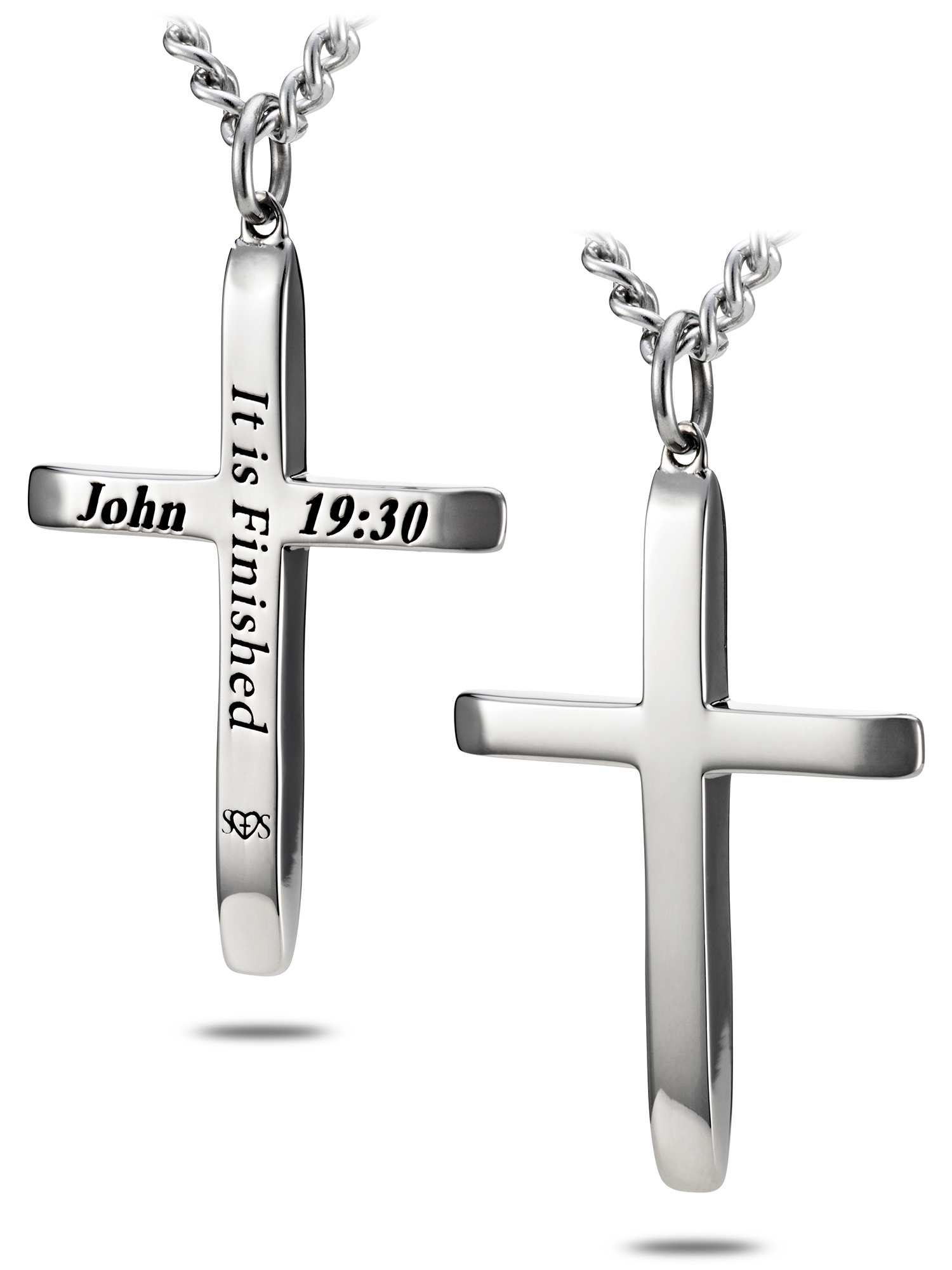
Men's 'It Is Finished' Cross Necklace Inscribed with John 19:30
Newest Guide & Blog Updates

Faith, Spiritual Gifts & Generosity: How God Uses Our Gifts to Serve Others
Faith, Spiritual Gifts & Generosity: How God Uses Our Gifts to Serve Others Ephesians 4:11-12 And H...

Best Christmas Gifts for Women: Meaningful Christian Jewelry She'll Treasure
Best Christmas Gifts for Women: Meaningful Christian Jewelry She'll Treasure If you are searching f...

Best Men's Cross Necklaces for 2026: Top Christian Cross Necklaces for Men
Best Men's Cross Necklaces for 2026: Top Christian Cross Necklaces for Men The best men's cross nec...

Pre-Holiday Jewelry Care Guide: How to Protect Your Faith-Based Jewelry
Pre-Holiday Jewelry Care Guide: How to Protect Your Faith-Based Jewelry Whether you wear your Shiel...

Best Christian Jewelry Christmas Gifts for Men
Best Christian Jewelry Christmas Gifts for Men Finding a Christmas gift for a man of faith can be c...

Early Christmas Gift Guide: Why You Should Start Shopping in August
Early Christmas Gift Guide: Why You Should Start Shopping in August If you have ever promised yours...